
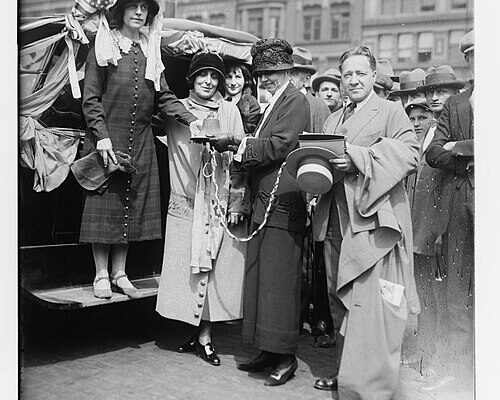
Bread and Roses is gebaseerd op een redevoering van de Amerikaanse sufragette en socialiste Helen Todd. Todd’s redevoering inspireerde James Oppenheim tot een gedicht, dat in 1911, op het hoogtepunt van de Amerikaanse arbeidersbeweging, werd gepubliceerd in The American Magazine. ‘Brood’ staat uiteraard voor fysieke behoeften, ‘rozen’ voor spirituele behoeften, respect en waardigheid. Rozen worden traditioneel ook geassocieerd met het socialisme. De onlangs overleden PvdA voerde 80 jaar lang de roos als symbool.
Het gedicht van Oppenheim werd in 1974 op muziek gezet door Mimi Fariña. De versie van Judy Collins dateert uit 1976.
As we come marching, marching, in the beauty of the day,
A million darkened kitchens, a thousand mill-lofts gray
Are touched with all the radiance that a sudden sun discloses,
For the people hear us singing, “Bread and Roses, Bread and Roses.”
As we come marching, marching, we battle, too, for men—
For they are women’s children and we mother them again.
Our days shall not be sweated from birth until life closes—
Hearts starve as well as bodies: Give us Bread, but give us Roses.
As we come marching, marching, unnumbered women dead
Go crying through our singing their ancient song of Bread;
Small art and love and beauty their trudging spirits knew—
Yes, it is Bread we fight for—but we fight for Roses, too.
As we come marching, marching, we bring the Greater Days—
The rising of the women means the rising of the race.
No more the drudge and idler—ten that toil where one reposes—
But a sharing of life’s glories: Bread and Roses, Bread and Roses.
Uitgelichte afbeelding: Helen Todd, tweede van links – By Bain News Service – https://loc.getarchive.net/media/rosalie-jones-helen-todd-mrs-gordon-norrie-ag-hays-37f404, Public Domain, https://commons.wikimedia.org/w/index.php?curid=86429603
